Last call, first bell
Fourteen pairs of bartenders, servers, and cooks put on gloves in the West Bottoms on Sunday and fought one-minute rounds in front of their whole industry. It was the best sports night in Kansas City, and I had a seat. A dispatch from the Wettest Block in the World.
The block where West 9th Street drops off the bluff into the West Bottoms was once called the Wettest Block in the World, on the boosters’ claim that no street on earth packed more saloons into less real estate. The packing houses ran all night, the rail yards ran all night, and the bars stayed open for the men coming off shift at hours no respectable establishment kept. That block has been waiting a hundred years for the service industry to come home.
On Sunday night it came home wearing headgear.
At Incline on 9th, a bar named for the cable railway that hauled workers down the bluff from 1885 to 1905, the people who pour this city’s drinks and run its kitchens put on gloves and fought each other, one-minute round after one-minute round, while several hundred of their coworkers, regulars, and friendly rivals cheered themselves hoarse. On a Sunday, because Sunday is the service industry’s Saturday. Everybody in the room knew it, and the room was better for it.
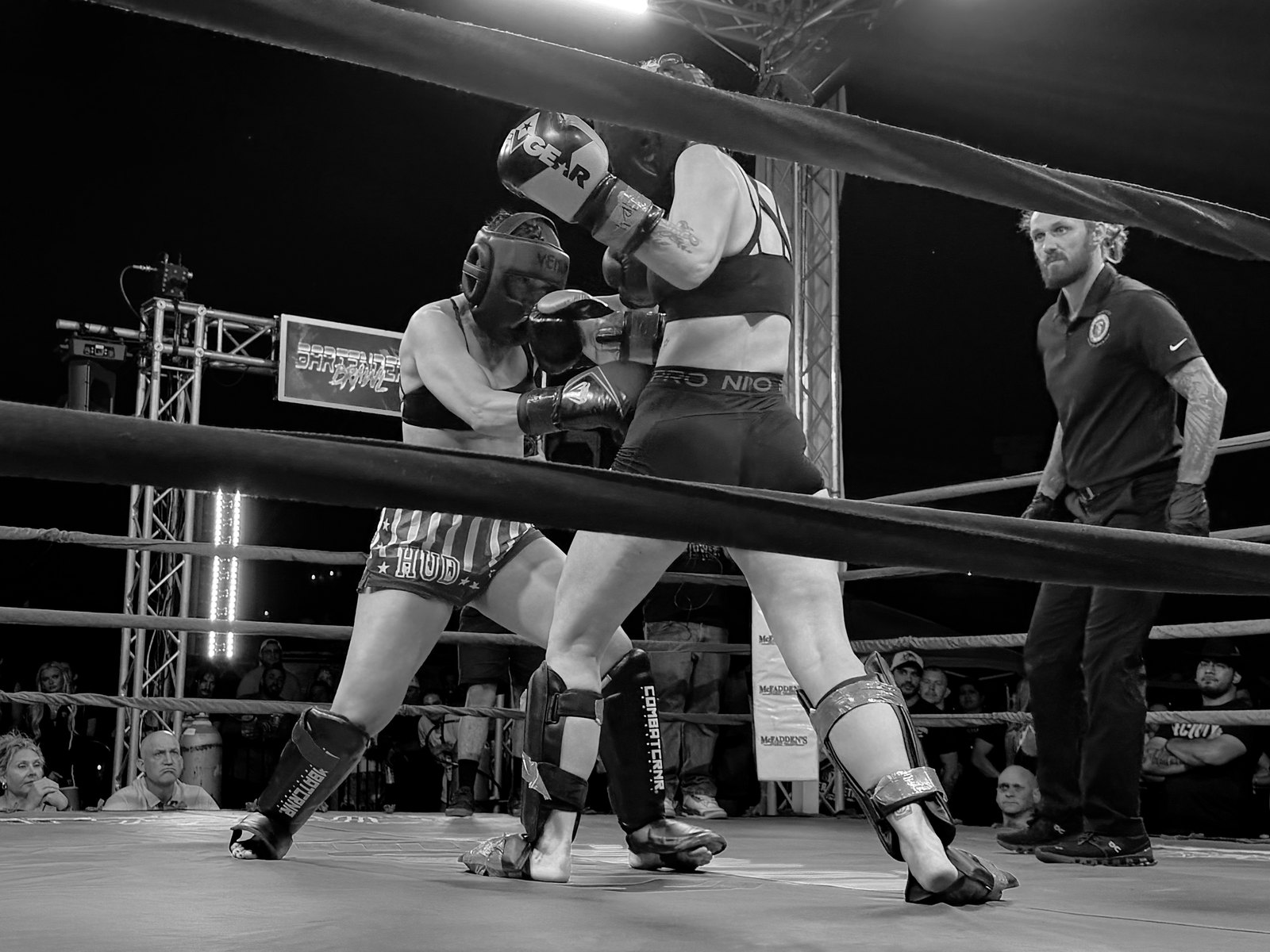
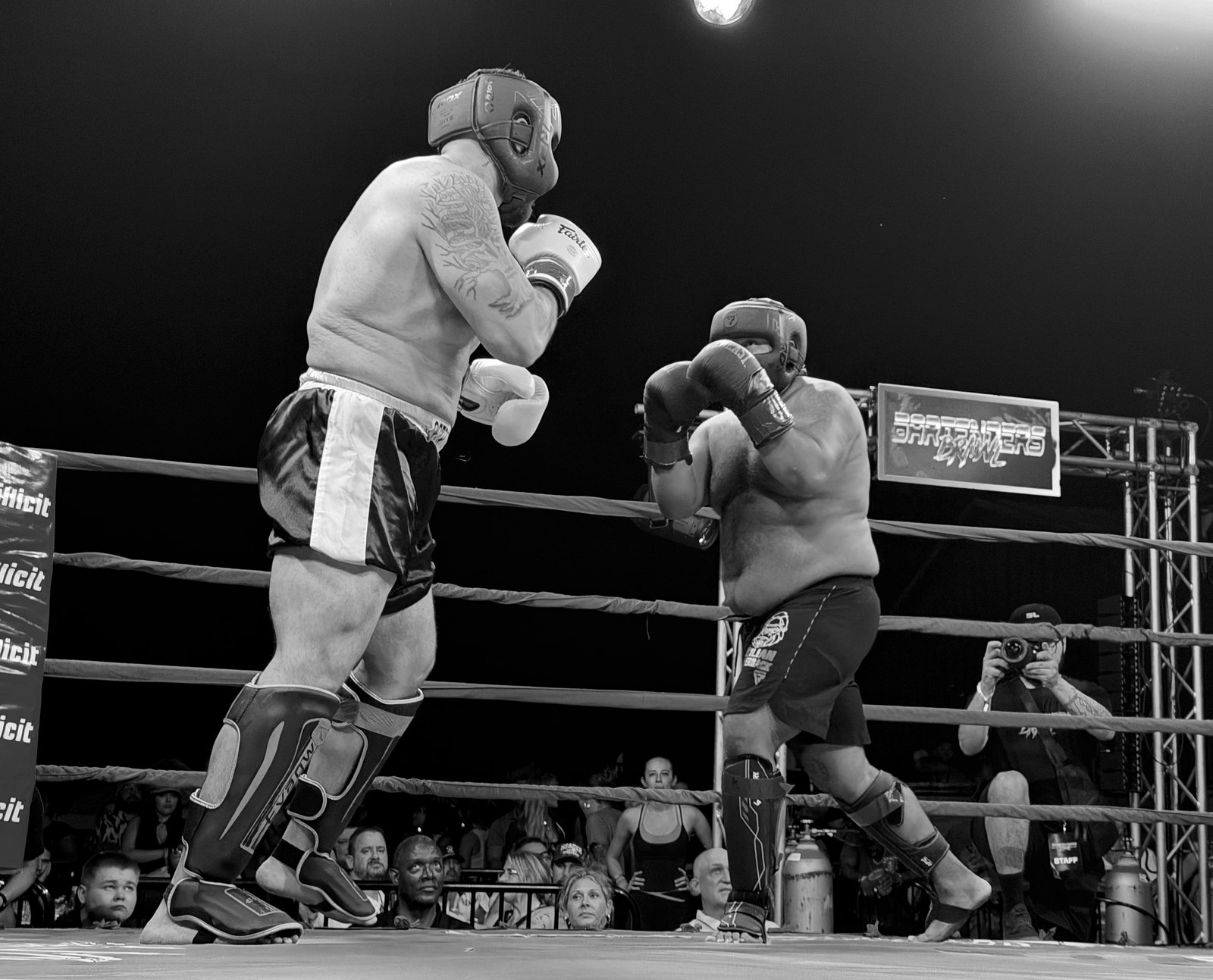
It is called the Bartenders Brawl, and its own slogan is the honest one: “built by the service industry, for the service industry.” The mechanics are half the charm: bartenders, servers, cooks, barbacks, and DJs sign up, get matched against somebody from another bar or another kitchen, spend weeks actually training with real gyms and real coaches, and then settle it in the ring. Fourteen bouts on Sunday’s card, all kickboxing, three rounds of a minute each, every one an exhibition under a full state sanction with licensed officials and a ring physician at the apron. This is not a parking-lot stunt dreamed up over shift drinks. The Missouri Office of Athletics paperwork reads like any professional card’s.
The fight everyone will remember
Every good fight night sends the crowd home carrying one name, and on Sunday it was Maisie VanSlander, 22 years old, out of Low Kick Camp, the Muay Thai gym a few blocks from the venue, in the first bout of her life, against Kalen McKinley. The fans voted her Best Walkout, and when the ballots closed she’d finished second in both People’s Champion and Best Celebration, behind only Brad Brotherton, who won his two categories the loud way and earned every decibel. Then the league itself went one better: at the end of the night it named VanSlander Performance of the Night and put a belt around her waist. First fight, and she left with the room in her glove and hardware on her shoulder. If there’s been a cleaner sports debut in this city this year, I haven’t seen it.
There’s the whole product, right there, and why it works: the person who built your old fashioned on Thursday is, on Sunday, a fighter, with a walkout song, a corner, and a few hundred people chanting. The industry that spends every night making other people’s nights gets one night that is entirely its own.
The between-bouts entertainment deserves its own paragraph. The PBR girls danced between rounds, which, at a service-industry fight night, is about as close to a home team’s cheer squad as this crowd was ever going to get. At some point the ring boy, Benjamin, got hold of the announcer’s microphone, smoothly, like he’d been planning it since sound check, and it turned out he had an agenda. He’d spotted his man out in the crowd: Sam Baum, fresh off knocking out his opponent in the sixth fight of the night. He called him out in front of everybody: 205 pounds, kickboxing. Instead of ducking, Baum came to the ring, and beside him came a second man in a pair of overalls, looking farm-raised through and through. From their side came the counteroffer: an actual contract, 220 pounds, MMA rules. Negotiations collapsed on the spot. Nothing got signed. One faction of the crowd held that you don’t negotiate with terrorists; another hollered “any place, any time”; and the show did the smartest thing available, which was to leave the whole dispute hanging off a cliff and ring the bell for the next fight. Was it staged? I honestly couldn’t tell you, and that’s the highest compliment I know how to pay a fight promotion.
The league that came down the river
The Brawl is produced by the Midwest Fight League, and the league’s story is better than a promotion this size has any right to own. MFL is not a Kansas City native. It’s a mid-Missouri operation that has been running sanctioned amateur cards out of Columbia and the Isle of Capri casino in Boonville since 1999, hundreds of bouts’ worth of state paperwork before Kansas City ever heard the name. That kind of run in the Missouri amateur fight business is not a hobby. It’s an institution with scar tissue.
The Kansas City chapter is new, and it runs on a distinctly Kansas City engine: Rudy Bears, the retired professional welterweight from Independence (Bellator, Strikeforce, a 2009 bout with Tyron Woodley back when Woodley was the storm coming up the road, a Shamrock FC title in 2015), who now owns Rudy Bears Brazilian Jiu-Jitsu & MMA in Westport. State filings list Bears as the league’s matchmaker starting in late 2025, which is exactly when MFL began showing up on this side of the state, and his fingerprints are all over the Brawl: a big share of Sunday’s fighters train at his gym, most of the rest at Low Kick Camp. Because when a bartender decides to fight a line cook in front of the whole brunch staff, somebody has to teach them how, keep the match fair, and get everybody home healthy. The somebody here spent fifteen years doing it for real.
The growth curve is the kind a sports section is supposed to notice. The first Kansas City card, August 2025, drew 756 people by the state’s official count. The first Bartenders Brawl at the Incline, this past May: 808. In June, MFL put a full MMA card on the KC Live! block at Power & Light, billed as the first MMA down there since Bellator in 2010, and drew 953. Sunday was the fourth Kansas City event in thirteen months, and the rooms keep getting bigger.
The quiet part, said into the mic
The night had a quieter register, too. Between bouts, the music dropped and a man took the microphone to talk about mental health instead of hyping a fight. He was introduced as being with Mind of a Monarch, the Kansas City nonprofit the Brawl has named its official nonprofit partner, and for a few minutes a fight crowd listened to him talk about the thing this industry talks about least. A raffle followed. It brought in hundreds of dollars, a number that won’t change the world, raised in a room where the subject usually wouldn’t get the floor at all.
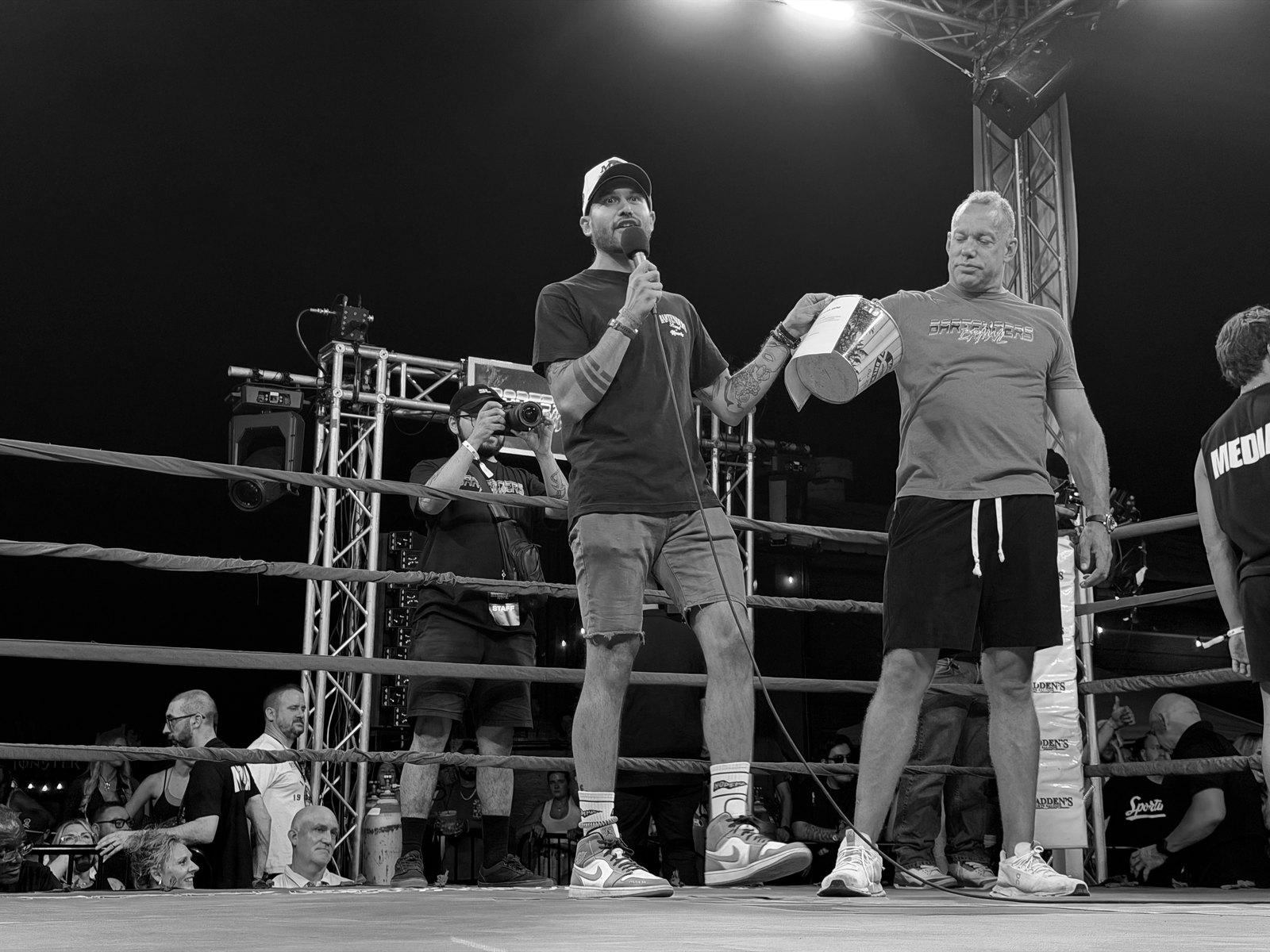
Mind of a Monarch is nearly as new as the Brawl itself: a 501(c)(3) since September 2025, founded by Jacob Scott, who came out of the hospitality world and built the organization around “honest conversations” about mental health, starting with the industry he came from. The league says every ticket sold supports the work, and fighters can sign on as Monarch ambassadors.
The pairing is not decoration, because the numbers underneath it are ugly and federal. Government survey work has ranked accommodations and food service at the top of all American industries for substance use disorder, at 16.9 percent of workers in a single year, highest of the nineteen industries studied, and CDC occupational data puts food-prep and serving jobs among the elevated groups for suicide. This is an industry that closes at 2 a.m., runs on adrenaline and tips, and celebrates every survived shift in the same building where it works. It has never had an easy place to say any of that out loud. A fight ring, of all places, turns out to be one: you train for weeks, somebody coaches you, somebody corners you, and several hundred people who do exactly what you do spend their one night off yelling your name.
That’s the thing the Bartenders Brawl has actually built, under the headgear and the walkout songs. Kansas City’s service industry was always a community. It just met after close, in ones and twos, over shift drinks. On Sunday it met all at once, in public, on the Wettest Block in the World, cheering for its own and passing the hat for its own, and it went back to work Monday holding the best stories in town.
What the crowd was worshiping
Here’s what gets you, from a seat in that crowd. The organizers are pros of the fight game, and the sanctioning paperwork and the matchmaking résumés say so, but there’s a message running under the show, an agenda bigger than business as usual. The passion behind all those punches isn’t only for the martial arts. It’s for the mentality of the martial artist, and for handing it out to anyone who signs up: the training, the discipline, the getting up.
Yes, somebody got knocked out on Sunday night. Some others left dazed, and all of them will be sore in places office workers don’t have names for. Yet the losing feeling never once got loose in that crowd, and it never showed on a single fighter who came up short on the cards. They’d trained for weeks, walked out to their songs, and thrown everything they had, and the room treated every one of them like a winner, because by any measure that matters, they were.
They’ll run it back eventually, since these things have a way of scheduling themselves, and when they do, you should go. Because in a sense, I attended Church at the Incline on 9th this Sunday. I sat among the crowd, and somewhere between the walkout songs, the raised glasses, and the collection basket it came to me that we were all worshiping something. We were all worshiping The Fight — not The Outcome. The outcomes we just live with, the way this industry always has: sore on Monday, back on shift by evening, already telling the story of the next one.